Promega Helix Trip to Patagonia
Promega created a special incentive to reward field science consultants who help the scientific community via the Helix onsite stocking program. The winner had to meet ambitious criteria to receive 2 round-trip tickets to anywhere in the world, as well as a week of paid vacation and spending money. I won and this is a story of my trip!
I have been a Promega Client Rep working with our clients in the San Francisco Bay Area for the past 6 years. I was very fortunate to win Promega’s Helix Travel award last year which allowed me to visit any place in the world – with the stipulation that I had never been there before.
The decision for where to go was a tough one but I do have one major criteria: there must be mountains! I have been a rock climber for nearly 20 years and love spending time in Yosemite and the Sierra Nevada in California but longer vacations almost always have me scheming visits to other mountain ranges.
Patagonia quickly jumped to the top of my list. It’s not just a clothing company; Patagonia is the great mountain range at the southern tip of South America. The logo for the company by the same name is the silhouette of the mountains from a tiny Argentinian town called El Chelten. The company was started by Yvonne Chouinard, a Yosemite climber who was so obsessed with his travel to El Chelten and the surrounding areas that he named his company after it.
I had never been to Patagonia but have heard stories about this range for literally decades. It has a reputation for both some of the best climbing and worst weather in the world. But generations of climbers, including some friends, have become obsessed with this range and I was really curious. But this would not be a climbing trip, I decided to leave my gear at home. It was much too intimidating to try to climb here without having ever seen it with my own eyes. This would be a scouting trip to better understand what I would be up against if I was to climb in Patagonia.
I could take one person with me and I chose my brother. We’ve gone on lots of adventures together over the year but it had been at least 5 years since our last trip.
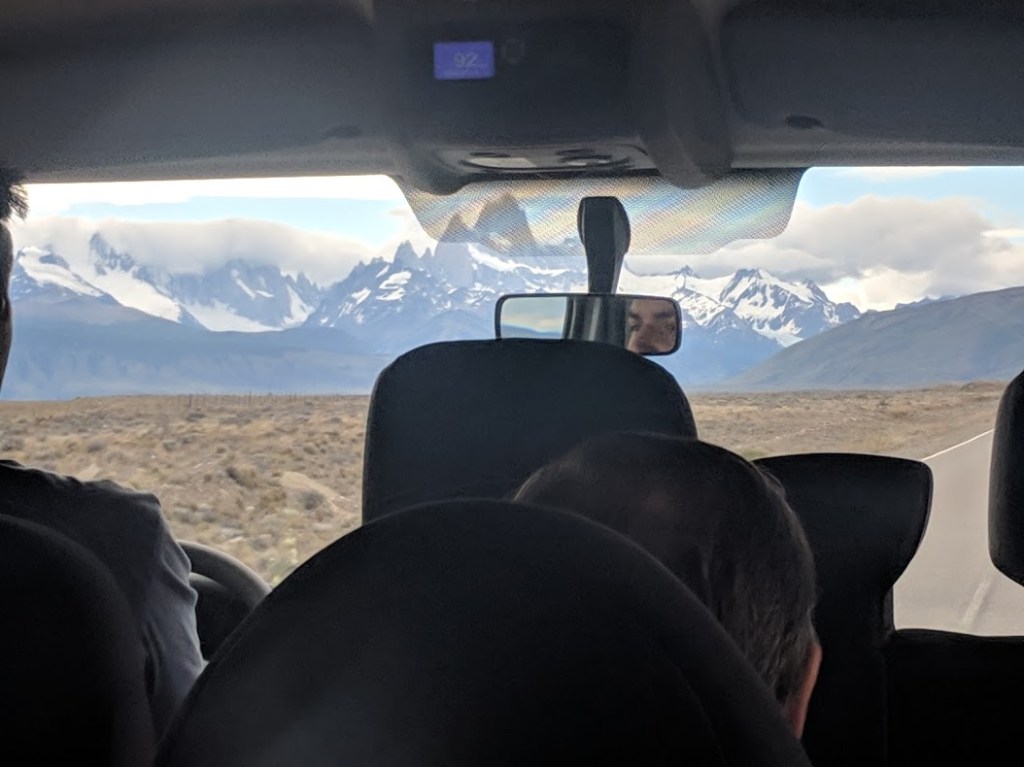
These mountains are remote. We took an International flight to Buenos Aires, a short flight to El Calafate, and then a long bus ride to finally get to El Chalten. The approach to the mountains was surprisingly on some of the flattest terrain I’ve ever been on. It was hard to imagine the fabled Patagonian mountain being anywhere around but then they slowly rose from the horizon as we motored along. The mountains have nearly no foothills and just rise straight out of the earth in a way that I’ve never seen before.
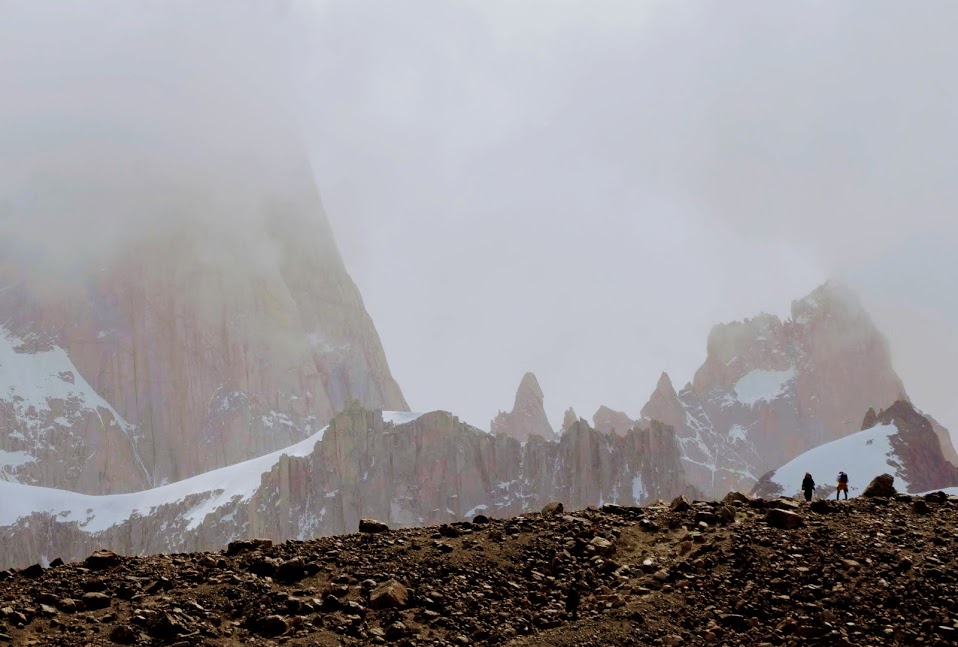
El Chalten is a town in transition. It was a small frontier town with barely a road when the first climbers started visiting, but its fame has grown. There are now fancy little restaurants and lots of new construction, but there is a still a rustic vibe. You see both regular tourists but also a community of ‘dirtbag’ climbers coming from all over the world to test themselves on these mountains.
We were excited to explore and took off first thing in the morning with packs full of empanadas. The views were stunning, but the weather was as variable as reputation would have us believe. It would drizzle, then be sunny, followed by intense wind all in the span of an hour. The days were also particulalry long since this is so close to the south pole during their summer. We took advantage of our first day by hiking for around 12 hours and 20 miles.
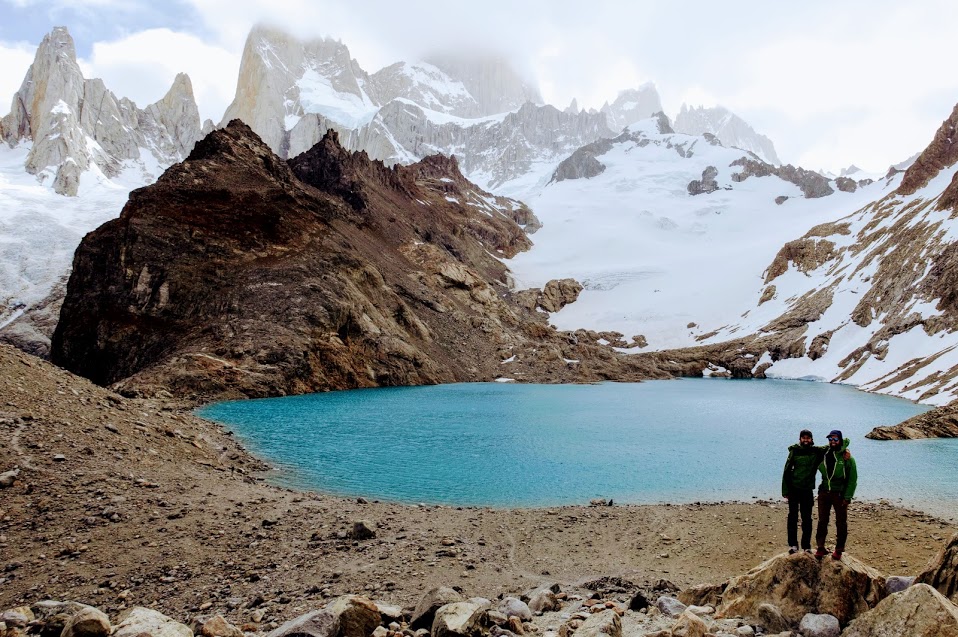
The mountains from climbing lore showed themselves at times. The great Fitz Roy is the highest peak in the range (also the tallest peak on the clothing brand’s logo). Yvon Chouinard climbed the 3rd ascent in 1968 by a new route dubbed The California Route. Famous climbers such as Alex Honnold and Tommy Caldwell continue to push the sport forward on this peak (check out Line Across the Sky). Two of my climbing partners climbed Fitz Roy as a culmination of a 2-year full time climbing trip where they systematically worked at the skills required. These are some of the best climbers I know personally, and even with that much preparation they barely pulled it off. Seeing this peak with my own eyes was very inspiring but picturing myself being up there was terrifying. It’s as big as the biggest walls in Yosemite except it comes out of steep glaciers and is many many miles further from a road.
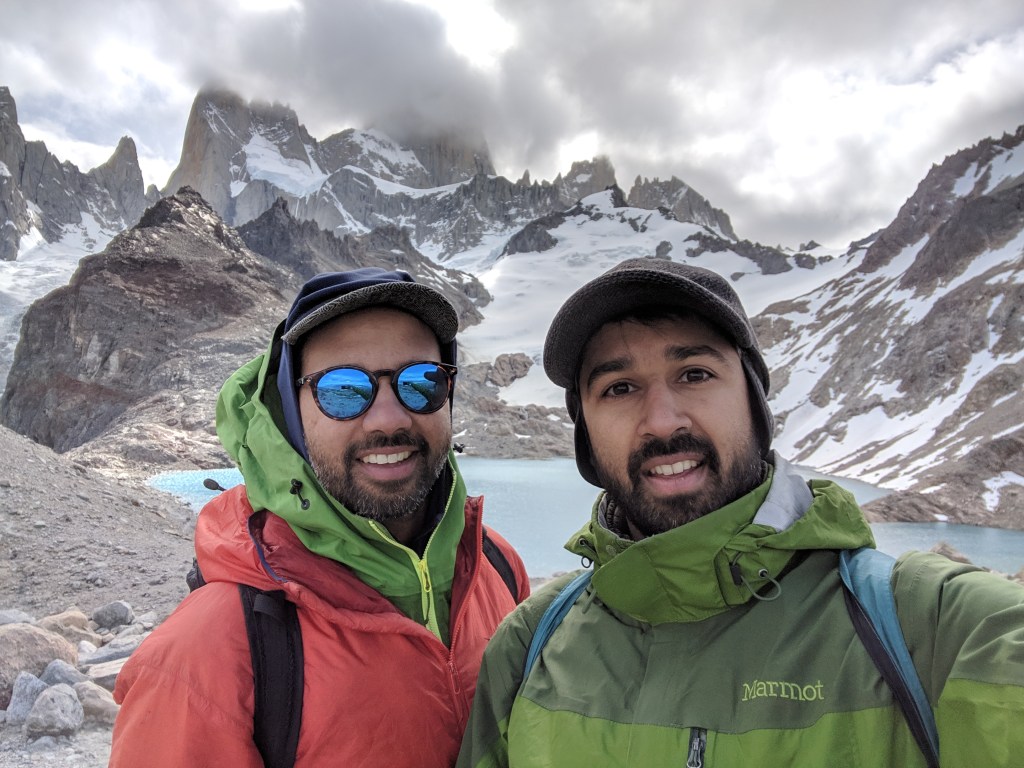
The one peak that never came out as we hiked around the range was Cerro Torre. Though not the biggest peak, it is probably the most storied. The famous director Werner Herzog produced a documentary on this peak called the Scream of Stone. I can’t think of a better description of this peak, it comes out of the glacier at an impossibly steep angle and looks more like a column of granite than a mountain peak. It’s also unique in that it generally has a large overhanging mushroom cloud of snow and ice on its summit which has thwarted many ascents. The most determined climbers have resorted to tunneling through to reach the summit. Even when we were in the sun hiking around the valley beneath Cerro Torre, a small cloud sat on top of the summit…probably forming that famous snow mushroom.
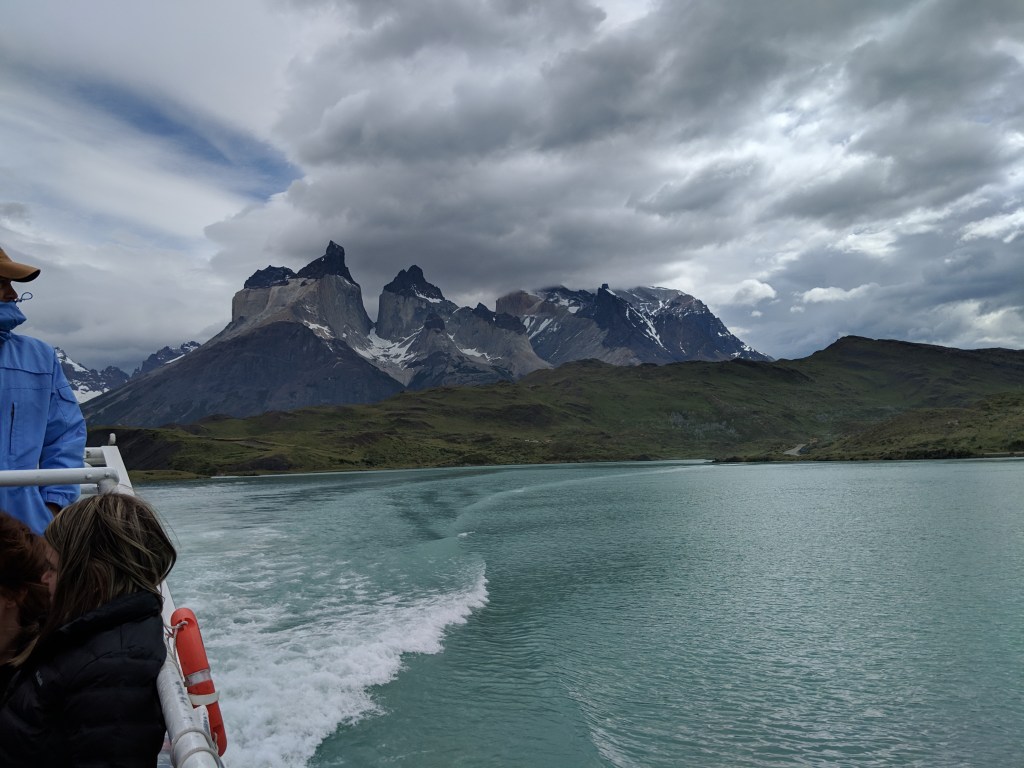
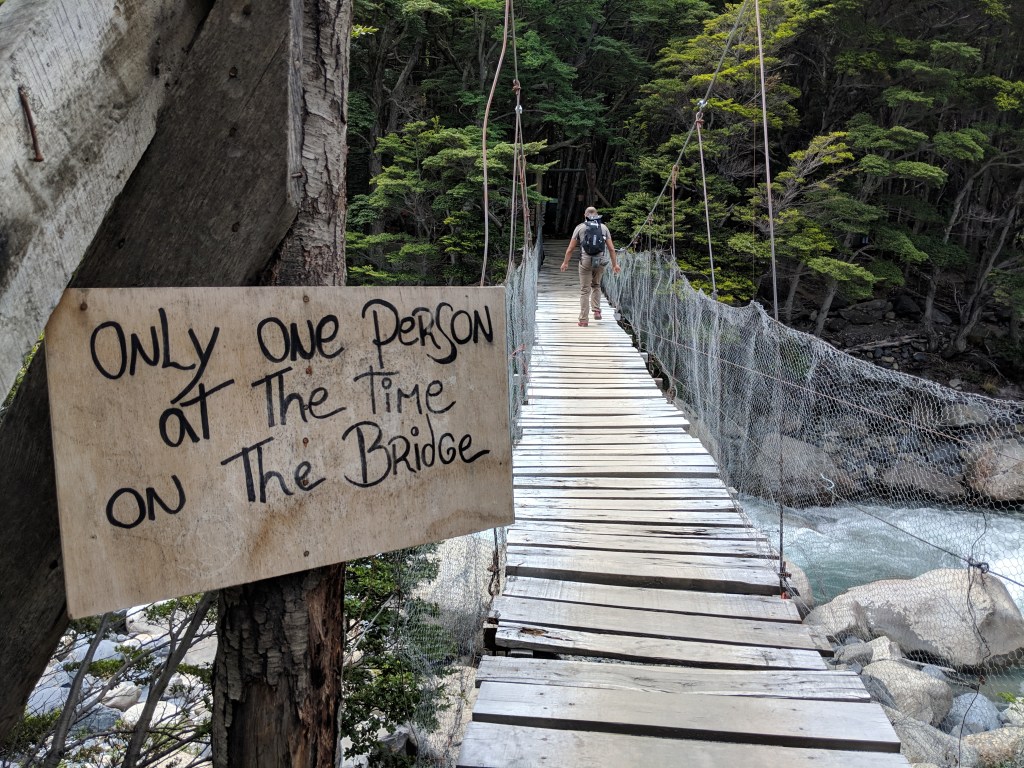
After exploring this corner of Patagonia we took a long bus ride into Chile and probably the most popular part of the Patagonia range: Torres Del Paine National Park. This has been drawing visitors for longer than El Chelten and has built up hiking infrastructure similar to the hut system of the Alps. There are many ‘off the grid’ huts called refugios that you can stay in along multi-day hikes of the park. The refugios are very nice, more like slightly rustic hotels with electric lights. We usually live out of tents in the mountains but were very appreciative of the comfortable shelters since the weather here was no less variable. We hiked between huts on what’s known as the ‘W’ trail since your path approximates the shape of the letter with a hut at each of the points.
The views here were no less dramatic than El Chalten. We hiked to views of glaciers pouring out of the mountains, very unusual looking peaks, and some of the windiest weather I’ve ever encountered. You would have to lean against it as you hiked,
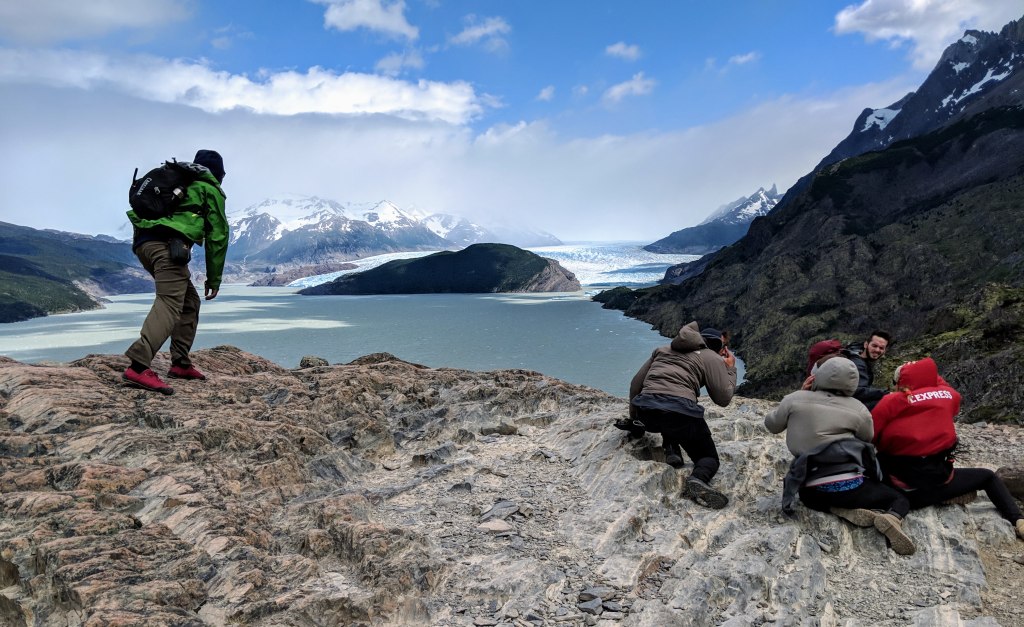
I was intimated at the prospect of climbing in Patagonia and that didn’t change. The mountains are too rugged and the weather too variable for this to be on my climbing bucket list quite yet. It did expand my horizons though. There’s nothing quite like seeing something that feels impossible to make the challenges in front of you a little smaller. The following climbing season in Yosemite, I pushed a little harder and took a leap in my abilities after a couple of years of stagnation. I ticked off climbs that had intimidated me only the season before. Maybe someday I’ll develop my abilities just enough to make the climbing in Patagonia feel possible, but even if that never happens, it’s still nice knowing there is a great mountain range on the other side of the world that is a little too big for me.
I’m very grateful to Promega for encouraging my adventures. If you would like to follow my trips, I share on Instagram here: @jdamin8
 Promega Helix Trip: Patagonia